Showing posts with label eastern chipmunk. Show all posts

Sunday, November 5, 2023

A Black Raspberry Feast, and Other Early-Mid July 2023 sights

Let's go back to July! (It seems I'm currently four months behind with posting sights from our property -- that's actually not bad for me at this time of year!)

This was an especially great summer for wild berries around here. The Black Raspberry plants produced lots of fruit in first half of July, and in August the Blackberries produced just so many berries, way more than I've seen in previous years on our property. Of course, it helps that we're letting these plants gradually expand from the edges of the woods into the meadow and in a spot near the house; with more plants each year, it makes sense that there would also be more berries. But even the shaded plants in the woods produced many more berries this year than I usually see. In any case, and whatever the reason, this was the summer of berries, and there was plenty of fruit for both people and animals!

Happily, this year I also figured out that the Black Raspberry patch at the north side of our house is perfectly situated for picture-taking through an open window, with our house acting as a big blind. It's nice to be able to watch visiting creatures from nearby without scaring them away. On July 10, this Eastern Chipmunk spent several minutes grabbing and munching on Black Raspberries (what happened to your tail, chipmunk?):


Got one:

Here are some more pictures of this little fuzzy creature enjoying the Black Raspberry feast:


A family of Baltimore Orioles was making good work of these berries, too. This juvenile oriole helpfully posed in the open for a bit, showing off its orange/yellow-splotched breast and berry-stained beak:

This young bird's wings and back are so neat and pretty:


And it looks like this bird even got some sort of insect snack in between berries:


This Rose-breasted Grosbeak (an adult female? or juvenile?) came near the Black Raspberry patch during this photo-shoot, too, but I'm not sure whether it was actually eating the berries. I like how pretty this bird looks perched here among still-green Chokecherry berries and glowing white Common Elderberry blossoms in the background:


On July 13, I spent some more time watching the Black Raspberry patch through the open window, and although I didn't get any more pictures of birds eating berries, I did see this cute Chipping Sparrow very close up as it foraged in the mowed area of our lawn:


And this Tiger Swallowtail made a lovely sight on Purple Coneflower blossoms:


And I couldn't resist taking a picture of the nearby Coral Honeysuckle (Lonicera sempervivens), blooming for the first time after I planted it here last year; what a beautiful plant, and native (and yes, it was a big hit with the hummingbirds this year):


On July 19, this handsome American Robin perched on top of the Coral Honeysuckle's arbor with its beak full of honeysuckle berries, but these from the non-native bushes that grow invasively around here:


Here are a few other assorted sights from early-mid July.

A soaking wet Blue Jay emerging after a rainstorm on July 3:


A mother White-tailed Deer and one of her fawns (the second fawn was also nearby but outside of the frame) munching on the Black Raspberry plants (and maybe berries?) next to the house on the evening of July 6:


A juvenile Rose-breasted Grosbeak in the apple tree near our deck on July 10:


This young grosbeak had a nice grooming session while I was nearby, so here are several pictures of this bird in many interesting poses, showing its lovely yellow underarms and other usually hidden features of its costume:


I love having families of Rose-breasted Grosbeaks around our yard every summer, even though the young birds always take some bites out of the tallest-growing plants in my garden -- especially peas and winter squashes, and sometimes they nibble on other vegetables, too. Actually, I think these birds helped me out with my squashes this year: they nipped off the growing ends of my most vigorous squash plants when they reached the top of the trellis, which made the plants send out a bunch of new growth points, and these plants ended up making way more flowers and fruit than I was expecting. Thanks, young grosbeaks!

Finally, here's a picture of a baby Eastern Phoebe in its nest in our shed on July 13 (there are some more babies hiding down in the nest, too); this was our phoebe pair's third nesting attempt this year, and the only successful one, after the first two attempts were parasitized by Brown-headed Cowbirds:


I'll close this post with some video clips from the trail camera in our woods, taken on July 5-18, and featuring a Blue Jay eating Black Raspberries that were growing next to the trail, a raccoon and three babies, a Virginia Opossum, an adult Ruffed Grouse with excellent camouflage (and I think some babies rustling around in the undergrowth), a Wild Turkey, and a Gray Squirrel also munching on Black Raspberries -- a fitting end to this berry-full post:


It's nice to look back at the height of summer as the days are now getting shorter and colder. And I still have more summer sights to share. More in a future post!

Saturday, December 31, 2022

The Rest of 2022, Part II: Mammals, Amphibians, and Reptiles

Let's keep going with 2022 sights on our property, continuing from my previous post about breeding birds! Here, I'll share some assorted highlights featuring mammals, amphibians, and reptiles. We'll still need some more posts after this. Here we go!


Mammals

On June 11 in the woods, I came across a female and male White-tailed Deer who, strangely, didn't run away when they saw me, but instead watched me carefully from not too far away for a few minutes. The female, in particular, was intent on watching me:


The male was a little further back, and I was very impressed with the sizeable antlers he was growing:


I wondered whether there might have been a fawn hidden somewhere nearby, but I didn't see anything, and I stuck to the path so I wouldn't accidentally disturb anyone. The deer and I watched each other for a while, and then I moved on.

Eastern Chipmunks are a common feature in our yard throughout the non-freezing months, and I couldn't resist a picture of this chipmunk on our old hollow apple tree on June 20:


Our vegetable garden is generally well-protected with tall netting to keep out deer and short metal fencing with small holes to keep out rabbits and rodents who would love to nibble on veggies. Every once in a while, though, some industrious creature finds a way through these defences, and in July this year, I returned from a trip to find whole bean plants and eggplant branches snipped off by a mysterious muncher, and only some of the leaves on those branches eaten. After a few days (and some more damage), I figured out that the culprit was a mother Meadow Vole who had found enough of a gap in my fencing and had moved her family of babies into a rock pile in the corner of my garden. On July 17, I removed the rocks and uncovered a handful of furry toddlers -- here's one of these cute and hungry creatures:

Meadow Voles are numerous in our yard and meadow, but I don't often get to see them up close like this. I moved the babies outside of the garden, saw the mother make her exit, and re-secured the gap in the fencing where she was probably getting through. Unfortunately, either I didn't successfully fix the gap or the mother vole was able to climb over the ~2-foot fence -- and I read some sources that suggest that voles can indeed climb if they have enough motivation -- because she kept removing bits of the beans and eggplants over the next few days. And then when I put out a live trap in the bean row, hoping to relocate her, she got caught in the trap and died; I suspect now that the trap might have gotten too hot in the sun. I was really sad to have caused the death of this inventive and persistent creature, but it is also true that we have tons of voles here (including her new batch of babies), vole mortality is high in general, and the purpose of my little vegetable garden is to make food for people, not voles. Here's hoping the fence keeps little furry creatures out of the garden in the future; it's really better for everyone if they stay outside.


Reptiles and Amphibians

Our first amphibian sightings this year were on March 19, when night-time temperatures were in the 50s and the ground was damp, and our first really big salamander night was on the rainy night of March 24, when we helped at least 20 Spotted Salamanders across the road near our house in a span of around 10 minutes. Amphibians were waking up and on the move! On March 26, I re-learned that it's best not to tidy up flower beds too early in the year, when I accidentally uncovered a Spring Peeper that was hunkered down in the dirt beneath some dead leaves on this freezing cold day; after taking this picture, I quickly covered the little frog back up:

The night of March 31 was another great time for amphibian movement. Here's a big Spotted Salamander who we helped across the road that night:


And here's a much more awake Spring Peeper on the damp pavement that night:


Although my garden fencing is (usually) pretty good at keeping out unwanted mammals, somehow amphibians and reptiles still find their way inside fairly regularly. I'm not sure how this large American Toad ended up submerged in the garden dirt on May 13, but I was very happy to have it there, and I encouraged it to please enjoy the slug buffet on offer:


This Brown Snake was living in the same rock pile in my garden as the Meadow Vole family, which I uncovered on July 17; I was surprised at this neighboring arrangement at first, but Brown Snakes are too small to pose a threat to voles, and instead this creature is also primarily a slug eater (yes, please, have all the slugs you want):


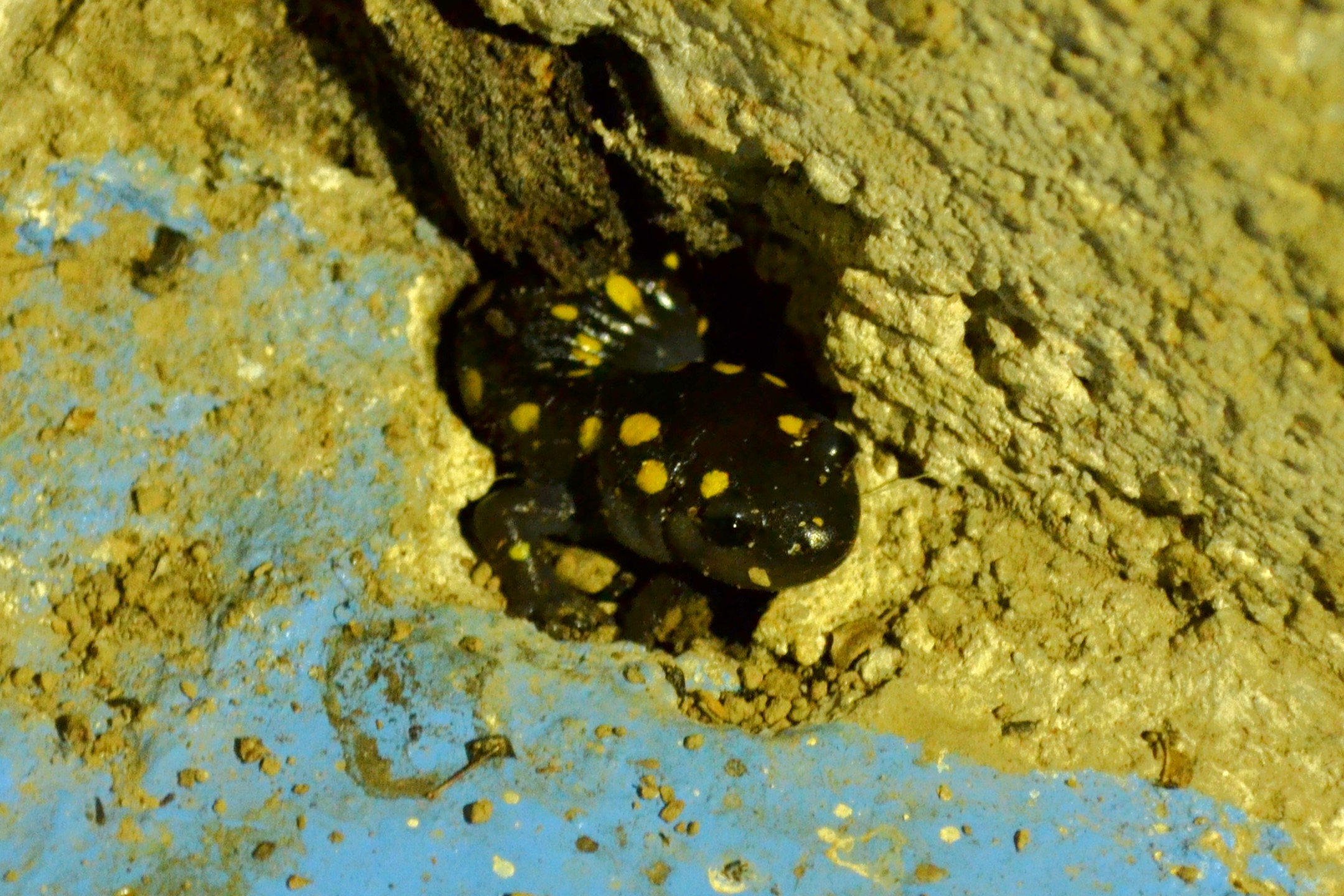
Sometimes amphibians show up in other unexpected places as well. This small Spotted Salamander spent some time in October in a little cave-like corner of our basement, and this is actually the second year we've found a salamander in that same spot; we weren't able to reach the creature well enough to relocate it, so we just enjoyed looking at its friendly face, pictured here on October 24:

I hope this little salamander was able to find its way back out the way it came, because I'm not sure we have enough food for it down here; and in any case, it should probably be sleeping. Good luck, little creature!


In the next post, look for more bird sightings from 2022, followed by insects and flowers!

Friday, March 18, 2022

Moving Toward Spring

February is undoubtedly a winter month around here, but then March starts to bring the first hints of movement and growth, and now we're inching gradually toward spring. (It's coming!) I love getting to witness these scattered signs of the changing seasons. I have several sights to share from our home over the past month or so, and I'll start back in wintry February.

On February 21, I wandered into our woods in the afternoon sun and ended up admiring some little living things that I would probably overlook in other seasons. This fallen branch had quite a pretty collection of lichen (I'm guessing the bright yellow one is Common Sunburst Lichen, Xanthoria parietina):


And I noticed the delicate tracings of some species of liverwort (genus Frullania) on many tree trunks:

Here's a closer view of one of those liverworts; I wonder how long it took this tiny, tiny plant to grow to this size:


This moss looked especially green and fuzzy surrounded by melting snow:


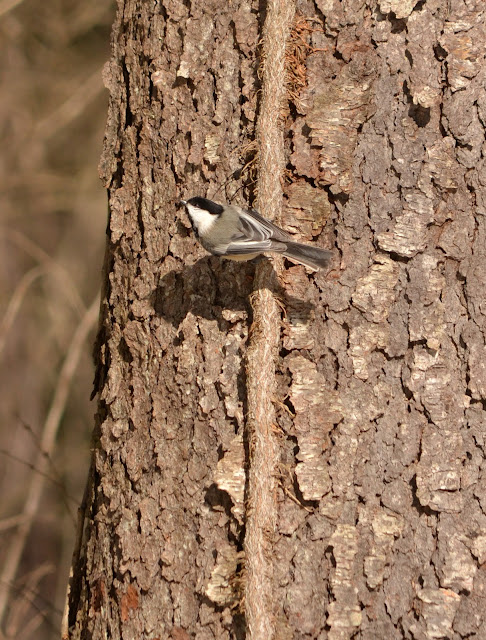
This Black-capped Chickadee was checking out tree trunks, too, and it perched for a bit on an old, thick Virginia Creeper vine:


On February 27, I stepped outside the front door to see an immature Bald Eagle wheeling over the house -- what a big bird!


I also admired the sight of our Tulip Tree still carrying many of last year's dried seeds against the clear blue sky:


On March 5, there were hundreds of Snow Geese and Canada Geese streaming northward overhead in big flocks. Yes! Let the spring migration begin! I am so happy that our property is apparently right under a regular flight route, because I love seeing -- and hearing -- these travelers each year in early March. These flocks made such interesting patterns in the sky:


Here's another big flock, this one with all Canada Geese:

And here's a closer view of one of the Snow Goose flocks (with a couple of Canada Geese mixed in):

Meanwhile, a male Northern Cardinal sang out from the top of a big spruce tree in our meadow:


We've actually had a cardinal (or maybe more than one) singing around here since December this winter, which seems very strange to me -- I'm used to hearing cardinals starting up in February. I suppose they're really interested in establishing this territory this year. Go for it, cardinal!


In early March, I learned that the Entomological Society of America has adopted "Spongy Moth" as the new common name for Lymantria dispar (formerly Gypsy Moth), and yep, we've got this moth's spongy egg masses all over the trees in our front yard, after this invasive moth's big population boom last year; here's hoping we'll see a decrease in their numbers this year:


On March 6, I got to see a couple more cool birds flying overhead on a sunny and clear day. This Cooper's Hawk crossed over our house a few times; I love those puffy white feathers at the base of its tail:


And it was wonderful to see a Turkey Vulture in the sky again after their absence during the winter:


A wet snowfall on the afternoon of March 9 made for a really pretty scene on the steeply sloped woods across the street from our house:


Here's a closer view into those woods:


Our first Song Sparrow of the year arrived in the midst of this snow, and it dug a hole at the base of the feeders and spent quite a bit of time feeding on dropped seeds there; I don't think I've seen a sparrow in a little snow burrow like this before:

What an industrious little bird. It flew from its hole to a nearby shrub a few times while I watched through a window, and I can't help thinking it looks super grumpy in this picture:


The next day, it was nice to see our newly-arrived Song Sparrow (the same bird?) in the sunlight:


This White-throated Sparrow also posed for bit in a tangle of wild grape vines:


In the woods, at least three recently awakened Eastern Chipmunks were scurrying around a snow-covered bank:


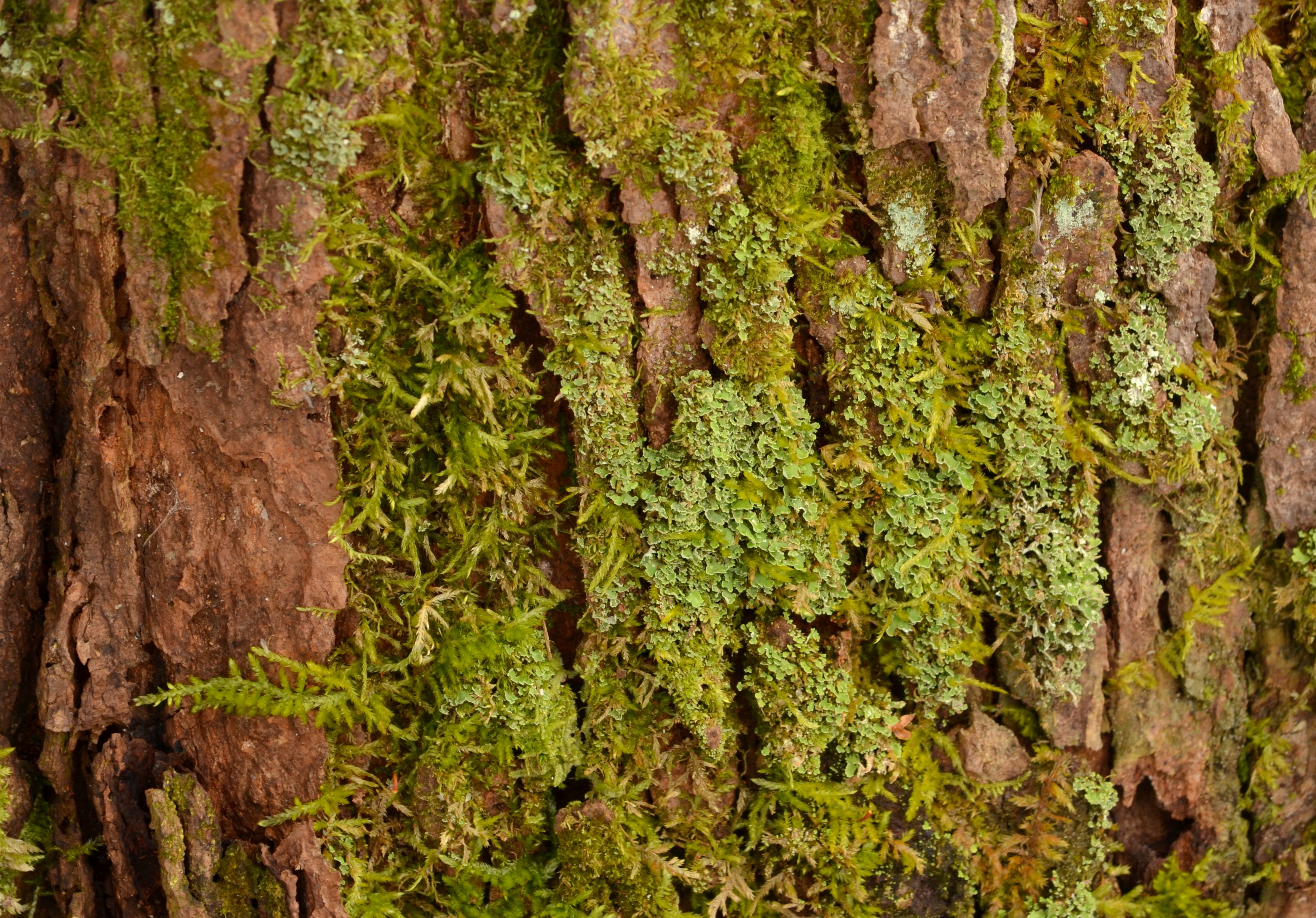
And perhaps because of the extra moisture from the melting snow, the various mosses and lichens on tree trunks in the woods were looking especially bright and verdant this day:


Here's another scene of tiny mosses and lichens among the crevasses of an old White Pine's bark:


Many of the trees had fuzzy socks made of moss:


And this moss almost seemed to be pouring out of this tree:


Back at the house, the persistent snow cover that's been around for months was receding, and our first Snowdrop buds were peeking through:


Then a storm brought another foot of snow, delaying things a bit.... But spring is certainly coming. Red-winged Blackbirds and Common Grackles are back in the area and singing, and as I write this, we're having a stretch of 60-degree and sunny days. Right now, I can see nearly equal parts bare ground and snow, I hear a Song Sparrow singing, and a pair of Eastern Bluebirds are checking out our nest boxes. The Snowdrops are uncovered again and I think they'll open today, our first flowers of the year. Here comes spring!